








Quick Links
Utility Pages
© Copyright 2026 by nexoraacademy.com

For students, graduates and working professionals, short-term certification courses in Kerala can provide a focused way to develop job-relevant skills without committing immediately to a long academic program. These courses can be useful when you want to strengthen an existing qualification, explore a new field or build practical knowledge for a career transition.
The important question is not simply which course is shortest. A useful certification should match your career objective, educational background and the skills employers expect in your chosen industry. This guide explains what to look for and how professional certification can fit into a practical career-development plan.
Short-term certification courses are focused learning programs designed to develop specific knowledge or practical skills within a relatively concentrated learning period. Their value depends more on the relevance and quality of the training than on duration alone.
Unlike a broad academic qualification, a focused certification may concentrate on a particular area such as food safety, logistics, healthcare administration, business, artificial intelligence or another professional field. This makes certification training particularly useful for learners who already know the direction they want to explore.
For example, someone interested in food-industry operations may benefit more from food safety and quality training than from a general business course. Similarly, a learner targeting warehouse operations should look for training that develops logistics-specific knowledge.
The most useful certification depends on the learner's career goal, but industry-focused programs can provide a practical starting point for skill development.
Nexora Academy's certification portfolio includes areas such as Food Safety & Food Processing, Hospital Administration & Healthcare, Business & Management, logistics, artificial intelligence and other industry-oriented fields.
Examples include:
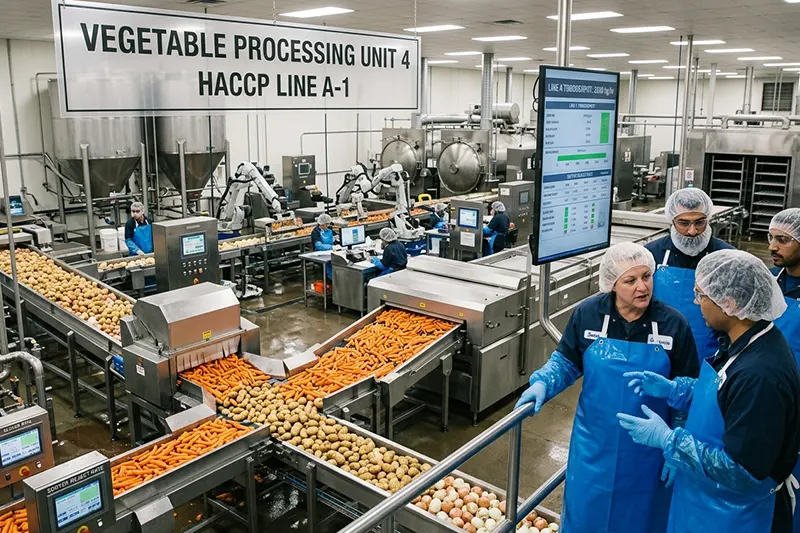
Food Safety and Quality Operations for learners interested in food processing, quality control and food-industry operations.
Hospital Administration and Healthcare certifications for those interested in healthcare support and administrative functions.
Logistics and Warehouse Management for learners interested in supply chain and warehouse operations.
Artificial Intelligence and Machine Learning for people developing skills in emerging technology.
Business and Management certifications for learners seeking broader professional and administrative skills.
The right option should be selected according to the role or industry you want to enter rather than popularity alone.
A valuable certification should develop skills that can actually be applied in a workplace, not simply provide a certificate at the end of training.
Look for programs that include:
Industry-specific concepts and terminology
Practical assignments or activities
Case studies and workplace scenarios
Relevant documentation or processes
Problem-solving and analytical skills
Professional communication
Assessment of learning
Opportunities to apply concepts practically
For instance, a food-safety learner may need exposure to hygiene practices, quality operations and food-safety systems. A healthcare administration learner may need knowledge of patient services, medical records, billing and hospital operations.
This practical connection is what can make skill certification courses in Kerala more useful for career preparation.
The best certification is the one that connects your current qualification with a realistic career objective.
Before enrolling, follow these steps:
1. Define the career direction.
Decide whether you want to enter a new industry, strengthen your current role or develop a specialised skill.
2. Check the curriculum.
Look beyond the course title. Review subjects, practical components, assessments and learning outcomes.
3. Understand the certification.
Check who awards the certificate, what framework or recognition applies, and whether those details are relevant to your intended career path.
4. Evaluate the learning format.
Working professionals may prefer flexible learning, while freshers may benefit from classroom-based or practical training.
5. Compare the training provider.
Look for transparent course information, qualified trainers, structured learning and relevant practical exposure.
Nexora Academy's certification programs state that they are designed around skill development and industry-focused learning, with programs aligned with frameworks including IIRDC–NCrF, NHEQF and NSQF.
Industry certification can be useful for freshers when it adds relevant skills to their existing academic qualification.
A graduate entering an unfamiliar industry may have theoretical knowledge but limited understanding of workplace processes. A focused certification can help bridge part of that gap through practical learning, terminology, assignments and industry-oriented concepts.
However, certification should not be treated as a substitute for every requirement of a job. Employers may also consider academic qualifications, communication, technical ability, practical experience, interview performance and role-specific knowledge.
A sensible approach is to use certification as one component of a broader employability plan.
Yes, working professionals can use professional certification to build specialised knowledge, update existing skills or explore a career change.
For example, an administrative employee could pursue healthcare management training before moving toward healthcare operations. A professional already working around food production could develop additional knowledge in food safety and quality operations.
The key is to choose training that complements existing experience. A certification becomes more meaningful when the learner can connect new knowledge with workplace responsibilities or a clearly defined next career step.
Certification recognition matters because learners should understand exactly what qualification they are receiving and who stands behind it.
Terms such as UGC approved certification course in Kerala should be examined carefully rather than accepted simply because they appear in promotional material. UGC recognition, university approval, vocational-framework alignment and professional certification can refer to different things.
Before enrolling, verify:
Awarding or certifying body
Applicable educational or skill framework
Qualification level
Credit structure, if applicable
Verification method
Whether the certification matches your intended career pathway
Nexora Academy states that its certification programs are developed in alignment with IIRDC–NCrF, NHEQF and NSQF frameworks. Learners should review the specific recognition and certification details of the program they intend to join.
Short-term certification can support different career directions depending on the subject and the learner's previous education.
Relevant pathways may include:
Food safety and quality operations
Healthcare administration
Logistics and warehouse operations
Business administration
Technology and AI-related roles
Quality and compliance functions
Industry-specific support roles
For example, Nexora Academy's Food Safety and Quality Operations certification identifies areas such as food safety, quality analysis, food operations, food processing and laboratory training, with potential roles including Food Safety Officer, Quality Analyst, Lab Technician and Production Supervisor.
Career outcomes, however, depend on qualifications, practical skills, experience, location, employer requirements and industry conditions.
A certificate becomes more useful when it is supported by demonstrable skills.
After completing training, consider building a simple portfolio of relevant work such as:
Practical assignments
Case-study solutions
Process documentation
Industry project work
Quality or operational checklists
Presentations
Skill assessments
You should also develop communication skills and prepare to explain what you learned during interviews. Being able to describe how a skill is applied in a real workplace is often more useful than simply stating the name of a certificate.
Nexora Academy offers career-focused certification programs designed around specific industry skill areas. Its certification-program information highlights industry-focused training, practical learning, professional guidance and programs aligned with IIRDC–NCrF, NHEQF and NSQF frameworks.
The academy provides certification options across areas including food safety, healthcare, business, logistics and technology. Learners can review the specific curriculum and certification details before deciding whether a program matches their educational background and career objective.
Start by identifying the role or industry you want to move toward, then compare the curriculum, practical learning, certification details and learning format of relevant programs. You can explore Nexora Academy's professional certification programs and discuss your educational background and career goals before selecting a suitable pathway.
The right short-term certification courses in Kerala can help learners build specialised knowledge, strengthen employability skills and explore new professional directions. However, the certificate itself should not be the only consideration. Curriculum quality, practical learning, recognition, industry relevance and your own career objective all matter. Nexora Academy provides multiple career-focused certification pathways, allowing learners to evaluate options according to their intended field and professional goals.
The best short-term certification course depends on your career objective and educational background. Options can include food safety, healthcare administration, logistics, business management, artificial intelligence and other specialised areas. Instead of choosing solely based on duration, compare the curriculum, practical training, certification authority, industry relevance and skills developed through the program.
Yes, short-term certification courses can be useful for graduates who want to add specialised skills to their academic qualification. A focused program can help learners understand industry terminology, processes and workplace applications. However, career outcomes also depend on academic qualifications, practical ability, communication, experience and employer requirements.
Choose a professional certification based on the career role or industry you want to pursue. Review the curriculum, learning outcomes, practical components, certification authority, recognition or framework alignment, learning format and course requirements. It is also useful to check whether the skills taught are relevant to current workplace expectations in your chosen field.
Yes, industry certification courses can be suitable for working professionals who want to update skills, specialise in an area or explore a career transition. The most useful program will complement your existing experience and career plans. Before enrolling, check the learning schedule, delivery format, assessment method and practical requirements.
A certification generally focuses on a specific skill, subject or professional competency, while a degree is a broader academic qualification with a more extensive curriculum. They serve different purposes. A certification can complement a degree by developing specialised skills, but it should not automatically be considered equivalent to a degree.
No certification can by itself guarantee employment. Employers may evaluate education, technical knowledge, practical skills, communication, experience, interview performance and other role-specific requirements. A recognised certification can strengthen a learner's profile when it develops relevant skills, particularly when supported by practical projects or demonstrable workplace knowledge.