






Quick Links
Utility Pages
© Copyright 2026 by nexoraacademy.com
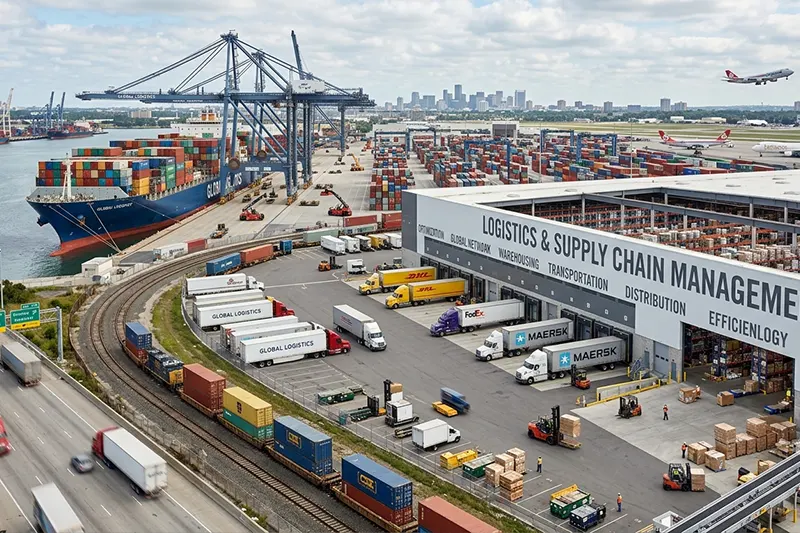
Every product that reaches a customer passes through a network of suppliers, warehouses, transport providers, distributors, and retailers. Managing this movement efficiently requires planning, coordination, accurate documentation, and effective inventory control. These activities form the foundation of logistics and supply chain management.
A B.Voc Logistics and Supply Chain Management Course in Kerala can help students develop vocational knowledge of how goods move from suppliers to end users. The field combines logistics education with practical areas such as warehouse operations, transportation, inventory management, procurement, distribution, and supply chain technology.
For students interested in careers in e-commerce, shipping, retail, manufacturing, or freight forwarding, understanding the curriculum and industry applications can help them decide whether this vocational pathway matches their goals.
A Bachelor of Vocation (B.Voc) programme is a vocational education pathway designed to combine subject knowledge with occupationally oriented learning. A programme in logistics and supply chain management focuses on the systems and processes involved in sourcing, storing, moving, and delivering products.
Logistics generally covers activities such as transportation, warehousing, and distribution. Supply chain management has a broader scope, connecting suppliers, procurement, production, logistics, and customer demand.
At Nexora Academy, the B.Voc Logistics and Supply Chain Management programme is structured around three stages: warehousing and logistics foundations, transportation and global logistics, and supply chain analytics and industry integration. The published programme information describes a three-year structure combining classroom learning, simulation, industry exposure, and on-the-job training.
Students should review the programme page to confirm current eligibility, curriculum, awarding authority, qualification details, and practical learning arrangements before applying.
The curriculum helps learners understand the different functions involved in moving and managing goods. The precise subjects and assessment methods depend on the programme.
Warehouse operations involve receiving goods, checking deliveries, storing products, picking orders, packing items, and preparing shipments. Students can learn how these activities fit into the wider logistics process.
Key learning areas may include:
Warehouse layout and storage methods
Receiving and dispatch procedures
Logistics fundamentals
Stock movement and recordkeeping
Basic transportation coordination
Digital tools used in logistics operations
Understanding these processes can help students recognise how efficient warehouse management supports timely order fulfilment and accurate stock records.
Inventory management involves maintaining appropriate stock levels and tracking the movement of goods. Businesses need accurate inventory information to avoid unnecessary storage costs, stock shortages, and order delays.
Students may explore stock classification, inventory records, stock reconciliation, reorder levels, and basic demand planning. Practical exercises can help learners understand how to record incoming and outgoing goods and identify discrepancies.
Inventory management is relevant to retail stores, distribution centres, manufacturing units, e-commerce warehouses, and other businesses that hold stock.
Transportation connects suppliers, warehouses, manufacturers, distributors, and customers. It involves selecting suitable transport modes, planning routes, coordinating shipments, and tracking deliveries.
A logistics curriculum may introduce road, rail, air, and maritime transportation, depending on the programme. Learners may also study distribution networks, freight coordination, delivery scheduling, and transportation documentation.
These skills are useful for understanding how businesses balance delivery time, cost, product requirements, and customer expectations.
Online retail depends on efficient order processing, inventory visibility, warehouse coordination, last-mile delivery, and returns management. International logistics also involves shipment coordination, trade documentation, and cooperation between transport providers and other parties.
Students may learn about e-commerce fulfilment, freight operations, import-export documentation, and air and maritime logistics.
The Directorate General of Foreign Trade (DGFT) provides official information and services relating to India's foreign trade framework. Learners interested in international logistics can use such government resources to understand the broader context of trade procedures and documentation.
Modern logistics operations rely on data to track inventory, measure performance, monitor deliveries, and support operational decisions.
Depending on the curriculum, students may be introduced to supply chain analytics, enterprise resource planning (ERP) systems, logistics reports, and operational performance indicators.
For example, a learner might analyse delivery delays, compare stock levels across locations, or prepare a report showing order fulfilment performance. These activities help connect logistics concepts with business decision-making.
Alongside technical knowledge, students need practical and organisational skills to work effectively in logistics environments.
Inventory accuracy: Maintaining reliable stock records and identifying differences between recorded and actual quantities.
Coordination and communication: Sharing accurate information with suppliers, warehouse teams, transport providers, and customers.
Documentation: Preparing and checking records related to goods receipts, dispatches, shipments, and inventory movements.
Problem-solving: Responding to delivery delays, stock discrepancies, damaged goods, and changes in customer demand.
Digital proficiency: Using spreadsheets, inventory systems, warehouse management tools, or ERP software where required.
Time management: Coordinating multiple orders, shipments, and operational deadlines.
Developing these skills through case studies, simulations, projects, and practical activities can help students understand how logistics decisions affect cost, service quality, and business performance.
Logistics and supply chain management skills are relevant across several sectors.
Retailers and online marketplaces need reliable stock management, order fulfilment, returns handling, and delivery coordination. Logistics teams help ensure that products are available and reach customers as expected.
Warehouses receive, store, organise, and dispatch goods for manufacturers, retailers, wholesalers, and logistics service providers. Knowledge of stock records, picking, packing, and dispatch procedures can be useful in these environments.
Shipping and freight forwarding businesses coordinate cargo movement, shipment documentation, transport bookings, and communication between different parties. International operations may also require familiarity with customs procedures and trade documentation.
Manufacturers depend on raw materials, components, and finished-goods distribution. Logistics teams coordinate material availability, supplier deliveries, storage, and movement between facilities.
Procurement and supply chain teams also work with suppliers to manage purchasing, delivery schedules, and inventory requirements.
Road transport companies, air cargo operators, ports, and other logistics providers support the movement of goods between locations. The roles and technical requirements vary according to the transport mode and employer.
The Government of India's Ministry of Ports, Shipping and Waterways is a useful official resource for students exploring the maritime and shipping sector.
A B.Voc qualification may help students explore entry-level opportunities in logistics, warehousing, transportation, and supply chain operations. Actual eligibility depends on the qualification awarded, employer requirements, and the candidate's practical skills and experience.
Potential career pathways include:
Warehouse Assistant: Supports receiving, storage, picking, packing, and dispatch activities.
Inventory Clerk: Maintains stock records and helps reconcile inventory.
Logistics Coordinator: Assists with shipment scheduling, delivery tracking, and operational communication.
Freight Documentation Assistant: Supports shipment paperwork and related records.
E-Commerce Operations Executive: Helps coordinate order processing, fulfilment, and returns.
Supply Chain Assistant: Supports procurement, inventory planning, reporting, and supplier coordination.
Transportation Coordinator: Helps organise deliveries, transport schedules, and shipment updates.
These are potential career directions rather than guaranteed job outcomes. Positions such as warehouse manager, supply chain analyst, or operations manager may require additional experience, specialised skills, or further qualifications.
Students should review job advertisements in their preferred sector to understand the requirements for the roles they want to pursue.
Before enrolling, compare programmes carefully using the following factors.
Look for coverage of warehousing, inventory management, transportation, distribution, procurement, documentation, and supply chain technology. Check whether the subjects align with your preferred career area.
Ask whether the programme includes simulations, projects, industry exposure, internships, or on-the-job training. Find out how practical skills are assessed and what facilities are available.
Confirm the awarding institution, the qualification you will receive, and the applicable recognition or approval arrangements. Do not assume that all programmes with similar names have identical academic status or progression opportunities.
Find out whether students are introduced to relevant digital tools, such as spreadsheets, inventory systems, warehouse management software, or ERP applications.
Ask what career guidance, interview preparation, internship support, or placement assistance is available. Clarify the scope of these services rather than assuming that they guarantee employment.
Students can explore the B.Voc programme category at Nexora Academy and contact the institution through its official contact page for current admission and programme information.
A B.Voc Logistics and Supply Chain Management Course in Kerala can help students develop knowledge of warehousing, inventory management, transportation, distribution, international logistics, and supply chain technology. These skills have applications across e-commerce, retail, manufacturing, shipping, freight forwarding, and distribution.
Before selecting a programme, evaluate its curriculum, practical learning opportunities, qualification details, and relevance to your career goals. A course that aligns with employer requirements and helps you develop practical skills can provide a useful foundation for exploring the logistics and supply chain sector.
It is a vocational programme focused on logistics operations, warehousing, inventory management, transportation, distribution, and supply chain processes.
Depending on the curriculum, subjects may include warehouse management, inventory control, transportation, e-commerce logistics, trade documentation, ERP systems, and supply chain analytics.
Potential entry-level roles include warehouse assistant, inventory clerk, logistics coordinator, freight documentation assistant, and e-commerce operations executive.
Yes. Accurate inventory management helps businesses track stock, reduce discrepancies, plan replenishment, and fulfil orders efficiently.
These skills are used in e-commerce, retail, manufacturing, warehousing, transportation, shipping, freight forwarding, and distribution.
Review the curriculum, practical training, awarding authority, qualification details, technology exposure, and career support before enrolling.