





Quick Links
Utility Pages
© Copyright 2026 by nexoraacademy.com

Artificial intelligence and machine learning are becoming increasingly relevant across technology, business, healthcare, finance, marketing and other industries. As organizations adopt data-driven technologies, learners are looking for ways to understand AI tools, machine learning concepts and practical applications.
An AI and Machine Learning Course in Kerala can provide a structured learning pathway for students, graduates and professionals who want to develop skills in this rapidly evolving technology area.
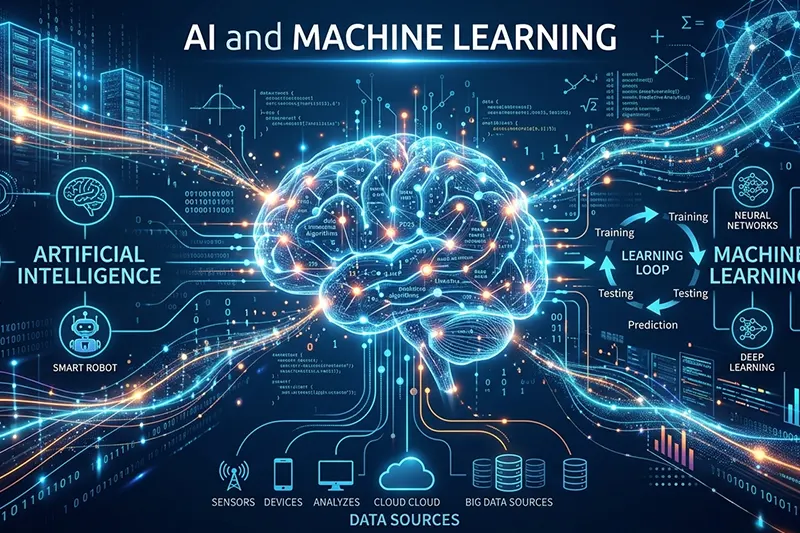
An AI and Machine Learning Course introduces learners to concepts and tools used to develop systems that can analyze data, identify patterns and support automated decision-making.
Artificial intelligence is a broad field that includes areas such as machine learning, natural language processing, computer vision and intelligent automation. Machine learning focuses on methods that enable systems to learn patterns from data.
The depth of these topics depends on the course level, curriculum and learner's previous technical background.
AI is a broad technology field with multiple applications.
Machine learning is an important area within AI.
AI courses can cover both concepts and practical applications.
Programming and data knowledge can support machine learning learning.
Practical projects can help learners apply AI concepts.
AI skills can be relevant across multiple industries.
Course curriculum and practical components should be reviewed before enrollment.
Learning AI and machine learning can help learners develop technology skills that are increasingly used across different professional fields.
AI is no longer limited to dedicated technology companies. Businesses use AI for areas such as data analysis, automation, customer service, content processing, forecasting and decision support.
For learners, developing foundational AI knowledge can therefore provide exposure to a technology that intersects with many industries.
However, career opportunities depend on factors such as technical ability, education, project experience and the requirements of individual employers.
A good AI learning pathway should gradually develop technical, analytical and problem-solving skills relevant to artificial intelligence and machine learning.
Important areas may include:
Python programming
Data handling and analysis
Statistics and basic mathematics
Machine learning fundamentals
Data preprocessing
Model training and evaluation
AI tools and applications
Problem-solving
Project development
The exact skills covered depend on the selected course. Beginners should look for a curriculum that introduces concepts progressively rather than assuming advanced technical knowledge from the beginning.
Python is widely used in AI and machine learning because it provides libraries and tools that support data analysis, machine learning and application development.
Learners who are new to programming can begin by understanding Python fundamentals before progressing to machine learning concepts.
Basic programming knowledge can make it easier to understand data structures, algorithms, model development and practical AI projects.
The amount of programming required will depend on whether the learner wants to pursue a technical AI development pathway or use AI tools within another professional field.
Practical learning helps students understand how AI concepts can be applied to real problems and datasets.
Instead of learning only definitions and algorithms, learners can work through examples, datasets, projects and problem-solving exercises.
Projects are particularly useful because they encourage students to move through different stages of an AI workflow, from preparing data to evaluating results.
A practical approach can also help learners build examples of their work that demonstrate their developing skills.
Beginners can approach AI and machine learning progressively, starting with fundamentals before moving into more advanced concepts.
A practical learning path can look like this:
Step 1: Understand technology fundamentals
Learn basic concepts related to AI, data and machine learning.
Step 2: Learn programming basics
Develop foundational Python skills and understand how code works with data.
Step 3: Build data skills
Learn data preparation, visualization and basic statistical concepts.
Step 4: Study machine learning
Explore supervised and unsupervised learning, model training and evaluation.
Step 5: Work on projects
Apply concepts to practical datasets and problems.
Step 6: Continue specialization
Explore areas such as natural language processing, computer vision or other AI applications according to your career interests.
Beginners can explore AI courses designed for introductory learning, but eligibility and prerequisites vary between programs.
Some courses may be structured for learners with limited technical experience, while advanced programs may expect programming, mathematics or computer science knowledge.
Before enrolling, review the course curriculum and eligibility requirements carefully. Understanding the expected starting level can help you choose a program that matches your current skills.
AI career opportunities span technical and applied roles, with requirements varying according to the specific position.
Depending on their education and skills, learners may explore areas such as machine learning, data analysis, AI application development, automation and other technology functions.
Common role titles can include machine learning engineer, AI engineer, data analyst and related positions. The responsibilities and requirements differ significantly between employers.
An AI course should therefore be viewed as a foundation for developing skills rather than a guarantee of a specific job.
Yes, AI skills can be applied outside traditional IT roles because organizations across industries are adopting AI-based tools and processes.
Healthcare, finance, education, marketing, manufacturing, logistics and customer service are examples of areas where AI applications can be relevant.
For instance, AI can support data analysis, forecasting, process automation and information management. The specific applications depend on the industry and organization.
This makes AI literacy useful for both technical professionals and learners who want to understand how AI can be applied within their existing field.
You should compare the curriculum, prerequisites, practical learning, projects, tools and intended learning outcomes before choosing an AI course.
A beginner may need a course that starts with fundamentals, while a programmer may prefer a more advanced machine learning pathway.
Look for a clear progression from concepts to application. It is also useful to understand whether the course includes hands-on activities and projects rather than focusing exclusively on theoretical content.
Nexora Academy offers a certification course in Artificial Intelligence and Machine Learning for learners exploring AI-focused education in Kerala.
AI projects allow learners to demonstrate how they apply technical concepts to practical problems.
A project can involve collecting or using a dataset, preparing the data, selecting an appropriate approach, training a model and evaluating its performance.
Projects also help learners identify gaps in their knowledge. Building several progressively challenging projects can provide a more practical learning experience than studying concepts independently.
AI learning can support career development by helping learners build technology skills that complement their existing education or professional experience.
A graduate can use AI knowledge to explore a technology-focused career direction, while a working professional may apply AI tools within their existing industry.
The most useful learning path depends on the learner's background. Combining AI knowledge with domain expertise can also help learners understand how technology can solve industry-specific problems.
Nexora Academy is a skill development and career training institution in Kerala offering vocational, diploma, postgraduate diploma and certification programs.
Its course portfolio includes a Certification Course in Artificial Intelligence and Machine Learning, giving learners an option to explore AI and machine learning within a structured skill-development pathway.
Learners should review the current course curriculum, eligibility and learning structure before deciding whether the program matches their goals.
The best starting point depends on your existing knowledge and career objective. Before selecting an AI and Machine Learning Course in Kerala, compare the curriculum, prerequisites, practical learning and project opportunities.
If you want to explore an AI-focused learning pathway, you can contact Nexora Academy for information about the available course and current admission requirements.
An AI and Machine Learning Course in Kerala can provide a structured starting point for learners who want to understand artificial intelligence, machine learning and their practical applications.
Whether you are a beginner, graduate or working professional, focus on building fundamentals first and then progressing through programming, data, machine learning and practical projects. A clear learning pathway can help you develop AI skills that are relevant to your long-term career direction.
It is a course that introduces learners to artificial intelligence, machine learning concepts, data and related practical applications. The depth depends on the program.
Python is widely used in machine learning. Learning its fundamentals can help beginners understand data processing, algorithms and machine learning projects.
Yes, beginners can start with foundational AI and programming concepts. However, course eligibility and prerequisites vary between programs.
Important skills can include programming, data analysis, mathematics, machine learning, problem-solving and project development. The requirements vary by role.
AI-related opportunities can include machine learning, AI development, data analysis, automation and other technology functions. Specific requirements depend on the role and employer.
Compare the curriculum, eligibility, practical training, projects, tools and learning outcomes. Choose a program that matches your current knowledge and career goals.